Thai Peanut Sweet Potato Buddha Bowl
Mini Thai Comfort Bowl
INTRODUCTION
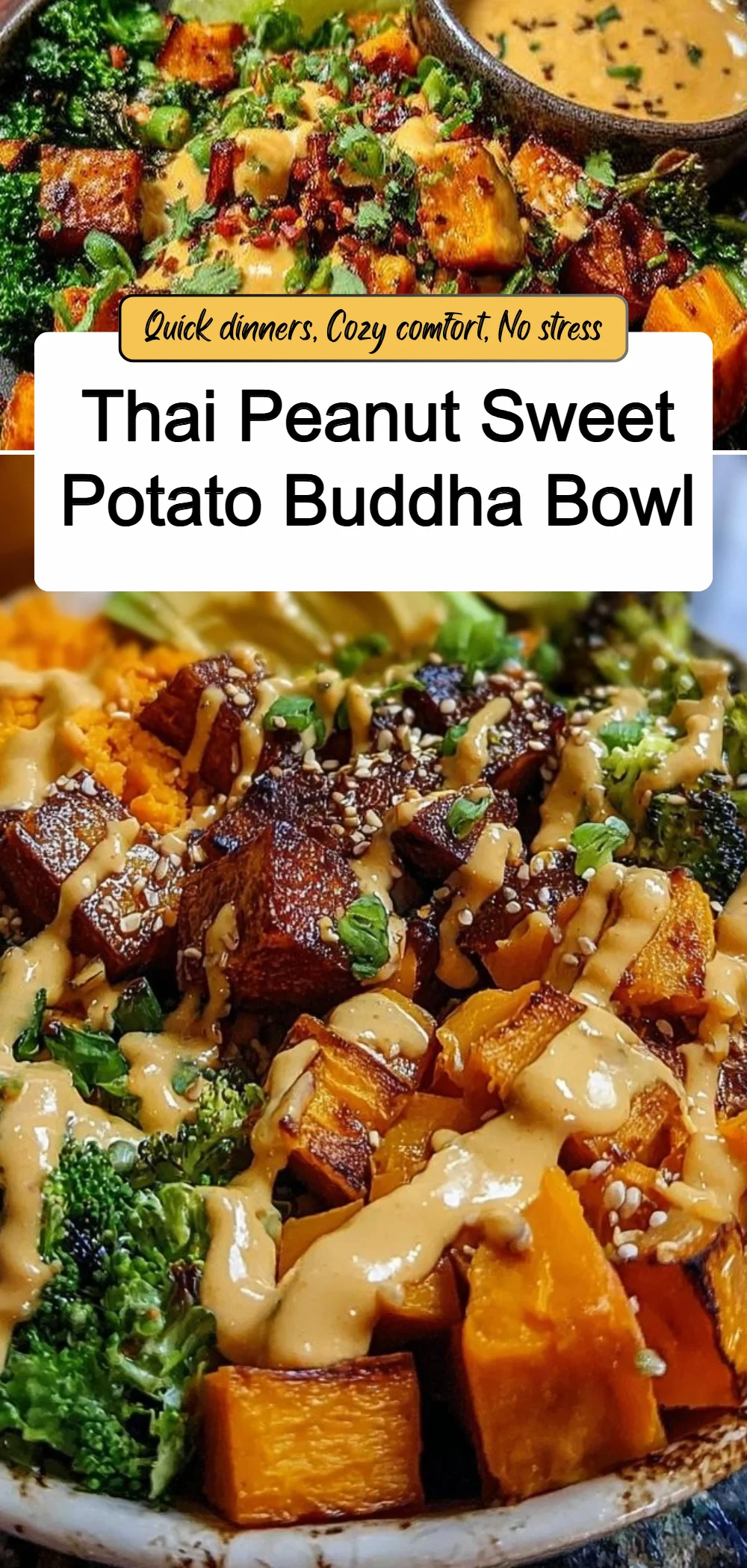
We gather around a warm counter, the kitchen smelling faintly of roasted sweet potatoes and toasted peanuts, and we feel that familiar calm that comes with making something simple and nourishing together. This Thai peanut sweet potato bowl is one of those recipes that hums with color and texture, offering crispy roasted edges, creamy avocado, and a velvety peanut dressing that tastes like a gentle hug. If you enjoy the cozy depth of an amazing Thai peanut chicken for cozy nights, this plant-based bowl channels many of the same flavors in a lighter, vegetarian package. We hope it becomes a weeknight favorite that feels both special and easy.
Quick Recipe Overview
- Prep Time: 15 minutes | Cook Time: 25 minutes | Total Time: 40 minutes
- Servings: 4 | Difficulty: Easy | Cuisine: Thai-inspired, plant-based
- Best Season: Fall and winter for roasted sweet potatoes, year-round for fresh produce
Reasons to Fall for This Bowl
- Vibrant flavor balance. The peanut sauce brings a rich, nutty backbone while lime juice and maple syrup add bright acidity and gentle sweetness that keep each bite interesting.
- Texture play in every forkful. Roasted sweet potatoes are tender with crisped edges, broccoli and cabbage add crunch, and avocado melts into a creamy finish.
- Effortless to assemble on a busy evening. Most of the work is hands-off roasting or mixing a quick sauce, so it feels like cooking without the fuss.
- Crowd friendly for gatherings. It fits casual meals, potlucks, or a cozy solo dinner and can be scaled up without losing its charm.
Pantry and Fresh Ingredients
- 2 medium Sweet Potatoes (Adds natural sweetness and hearty texture; substitute with butternut squash for a different flavor.)
- 2 tablespoons Olive Oil (Helps roast the sweet potatoes to crispy perfection; can be substituted with avocado oil.)
- to taste Salt (Enhances the overall flavor of the dish; adjust according to taste.)
- to taste Pepper (Enhances the overall flavor of the dish; adjust according to taste.)
- 1 cup Broccoli (Provides crunch and nutrition; other cruciferous veggies like cauliflower can be used.)
- 1 cup Shredded Cabbage (Adds freshness and color; substitute with kale or spinach.)
- 1 cup Grated Carrots (Gives a slight sweetness and crunch; available pre-grated for convenience.)
- 1 medium Avocado (Adds creamy texture and healthy fats; can be replaced by tahini for a nut-free option.)
- 1/2 cup Peanut Butter (Key ingredient for the sauce, delivering rich flavor; almond butter is a suitable alternative.)
- 1 tablespoon Soy Sauce (Provides umami; use tamari for a gluten-free option.)
- 2 tablespoons Maple Syrup (Adds sweetness to the sauce; can be swapped for agave syrup.)
- 1 tablespoon Lime Juice (Brightens the flavors of the dressing; lemon juice works well too.)
- 1 teaspoon Sesame Oil (Adds depth to the peanut sauce; use olive oil if unavailable.)
- 1/4 cup Fresh Cilantro (Adds fresh flavor and color; can be omitted for allergies.)
- 1/4 cup Peanuts (Provides a delightful crunch; crush them for the best texture.)
Ingredient Swaps and Notes
- Sweet Potatoes : Swap for butternut squash or purple potatoes if you want a different sweetness and color profile.
- Olive Oil : Use avocado oil for a higher smoke point when roasting at higher temperatures.
- Peanut Butter : Almond butter or sunflower seed butter works well for nut-free or varied flavor preferences.
- Soy Sauce : Tamari is a great gluten-free alternative and keeps that savory umami note intact.
- Avocado : Replace with a spoonful of tahini or sliced soft tofu if avoiding avocados or looking for a different fat source.
- Cilantro : Omit or use parsley if cilantro is not preferred, the bowl will still feel bright and fresh.
- Peanuts : Toasted sesame seeds add crunch if allergies require avoiding peanuts.
Step-by-Step Cooking Guide
- Preheat and prep. Preheat the oven to 425°F. Wash and cube the sweet potatoes into 1-inch pieces, then toss with olive oil, salt, and pepper to coat evenly.
- Roast the sweet potatoes. Spread the cubes in a single layer on a baking sheet and roast for 20 to 25 minutes, flipping once, until edges are caramelized and interiors are tender. Technique note: avoid overcrowding the pan so the potatoes crisp instead of steam.
- Prepare the broccoli and carrots. While the potatoes roast, steam or blanch the broccoli until bright green and just tender, about 3 to 4 minutes. If you prefer more crunch, skip the blanch and toss raw florets into the bowl.
- Make the peanut sauce. In a bowl whisk together peanut butter, soy sauce, maple syrup, lime juice, sesame oil, and a splash of warm water to thin as needed. Technique note: warm water helps the sauce emulsify smoothly and reach a pourable consistency.
- Assemble the bowls. Divide shredded cabbage, grated carrots, roasted sweet potatoes, and broccoli among bowls. Slice or cube the avocado and place on top.
- Finish and garnish. Drizzle the peanut sauce generously over each bowl, sprinkle crushed peanuts and chopped cilantro, and add an extra squeeze of lime if desired. Technique note: taste and adjust with salt or extra lime to balance flavors.
Pro-Level Tweaks for Texture and Timing
- Crispier roasted edges. For crunchier sweet potatoes, increase oven temperature to 450°F and roast on a preheated baking sheet. Toss the potatoes with a pinch of cornstarch before roasting to encourage extra crispness.
- Balanced sauce consistency. If your peanut sauce is too thick, warm a tablespoon or two of water and whisk slowly until it reaches the desired pourable texture. If it is too thin, add a bit more peanut butter or chill briefly to let it thicken.
- Timing for freshness. Roast the sweet potatoes first and keep them warm on low heat while quickly steaming the broccoli and assembling other components. This keeps textures at their best when served.
- Layer flavors deliberately. Add a sprinkle of flaky salt at the end to highlight the sweet and nutty notes, and consider a tiny pinch of chili flakes for heat if serving adventurous eaters.
Creative Variations to Explore
- Vegan grain bowl. Serve the same mix over brown rice, quinoa, or cauliflower rice to add a filling base that soaks up the peanut sauce. Swap soy sauce for tamari to keep things gluten-free.
- Mild kid-friendly version. Cut down the sesame oil and reduce lime to soften bold flavors, and swap shredded cabbage for sweet baby spinach for a milder profile that children often prefer.
- Spicy Thai kick. Stir in 1 teaspoon chili garlic sauce or a finely chopped fresh chili to the peanut sauce, and finish with thinly sliced radishes for peppery crunch and contrast.
- Regional twist with coconut. Add a splash of coconut milk to the peanut sauce and garnish with toasted coconut flakes to lean into tropical notes reminiscent of Southeast Asian coastal kitchens.
Best Pairings for a Complete Meal
Pair this bowl with a crisp cucumber salad dressed in rice vinegar and a touch of honey to balance richness. For drinks, iced green tea or a sparkling lime soda keeps the palate refreshed. Finish with a light dessert such as mango sorbet or a citrus olive oil cake to round out the meal without overpowering the peanut flavors.
Makeahead and Prep Shortcuts
Roast sweet potatoes up to three days ahead and store in the refrigerator in an airtight container. Keep the peanut sauce in a sealed jar for 4 to 5 days and whisk before serving; if it separates, the texture will come back with a quick stir. Vegetables like shredded cabbage and grated carrots can be prepped a day in advance, but slice avocado just before serving to avoid browning. For freezing, cooked sweet potatoes freeze well for up to 3 months; thaw in the refrigerator overnight and re-crisp briefly in a hot oven.
Plating and Cozy Serving Suggestions
Start with a base of shredded cabbage or grain, arrange roasted sweet potato clusters so caramelized edges face up, and cluster broccoli and carrots in neat sections for a visually appealing contrast. Place avocado slices slightly fanned and drizzle the peanut sauce in a slow zigzag so it falls over the vegetables and pools in the bowl. Finish with crushed peanuts and cilantro sprigs in the center so every bite gets both garnish and flavor.
Little Kitchen Secrets That Elevate It
- Toast the peanuts. Lightly toasting the peanuts in a dry skillet for a few minutes intensifies their aroma and adds a deeper crunch.
- Warm the sauce gently. A warm peanut sauce feels silkier against roasted vegetables and helps slightly melt the avocado when drizzled.
- Use room temperature ingredients. Bringing cooked sweet potatoes to just-warm and keeping avocado at room temperature preserves texture and keeps the bowl from feeling too cold.
- Finish with acid. A final bright squeeze of lime before serving lifts the peanut richness and makes the flavors pop.
Storing Smartly and Preserving Texture
To reheat, spread roasted sweet potatoes on a baking sheet and warm in a 400°F oven for 6 to 8 minutes to restore crisp edges, or heat in a skillet over medium heat for a similar effect. Avoid microwaving assembled bowls if you want to preserve crispness, though a quick 60 second microwave for components is fine when short on time. Store sauce separately and add just before serving to keep cabbage and carrots crunchy.
Frequently Asked Questions
Can I make this recipe nut-free?
Yes, replace peanut butter with sunflower seed butter and swap crushed peanuts for toasted pumpkin seeds to keep the crunch. Taste and adjust the sauce seasoning as seed butters can be slightly more bitter than peanut butter. Adding a touch more maple syrup or lime can balance the flavor if needed.
How long do leftovers keep?
Stored separately, the sauce will last 4 to 5 days in the refrigerator and roasted sweet potatoes around 3 to 4 days. Keep fresh components like avocado aside and assemble just before eating for best texture. If everything is mixed, aim to consume within 2 to 3 days.
Is this bowl gluten-free?
It can be gluten-free by using tamari instead of regular soy sauce and ensuring any store-bought peanut butter has no gluten-containing additives. Most fresh produce and basic pantry items are naturally gluten-free. Double-check packaged seasonings and sauces for hidden gluten.
Can I meal prep this for the week?
Absolutely, roast a large batch of sweet potatoes and portion out vegetables and sauce into containers for quick assembly. Keep avocado out until the day you eat the bowl to avoid browning. When reheating, re-crisp roasted sweet potatoes in the oven or skillet for best results.
What if I do not like cilantro?
Omit cilantro and replace with parsley or extra scallions for a fresh herb note. A tiny spritz of lime keeps the bright lift cilantro would otherwise provide. The bowl remains balanced and flavorful without cilantro.
How can I make the sauce creamier?
Warm the peanut butter slightly before whisking with the other sauce ingredients, or add a small drizzle of warm water or light coconut milk while whisking to reach a silkier texture. Warming helps emulsify the fats and water, creating a smoother finish.
Nutrition Info
- Serving Size: 1 bowl
- Calories: 520 (estimate)
- Protein: 12 g
- Carbs: 58 g
- Fat: 28 g
- Fiber: 11 g
- Sugar: 14 g
Nutrition facts are estimates and may vary based on exact brands and portion sizes.
A Warm Note From the Kitchen
We love how this bowl brings a little celebration to ordinary nights, turning humble vegetables into something comforting and bright. There is a special kind of joy in sharing bowls that invite everyone to customize a bite with an extra sprinkle of cilantro or a squeeze of lime. The combination of roasted sweetness and creamy peanut sauce feels like a small ritual, one that brings people together around the table whether the night is busy or slow. This recipe has a gentle, welcoming spirit that fits many traditions of gathering and sharing.
One Last Bite
If you make this Thai peanut sweet potato Buddha bowl, remember that the best meals come from small adjustments and shared moments. Pin the recipe, share it with someone who loves bold flavors, and enjoy the warm, nutty comfort of a bowl that is both nourishing and homey.
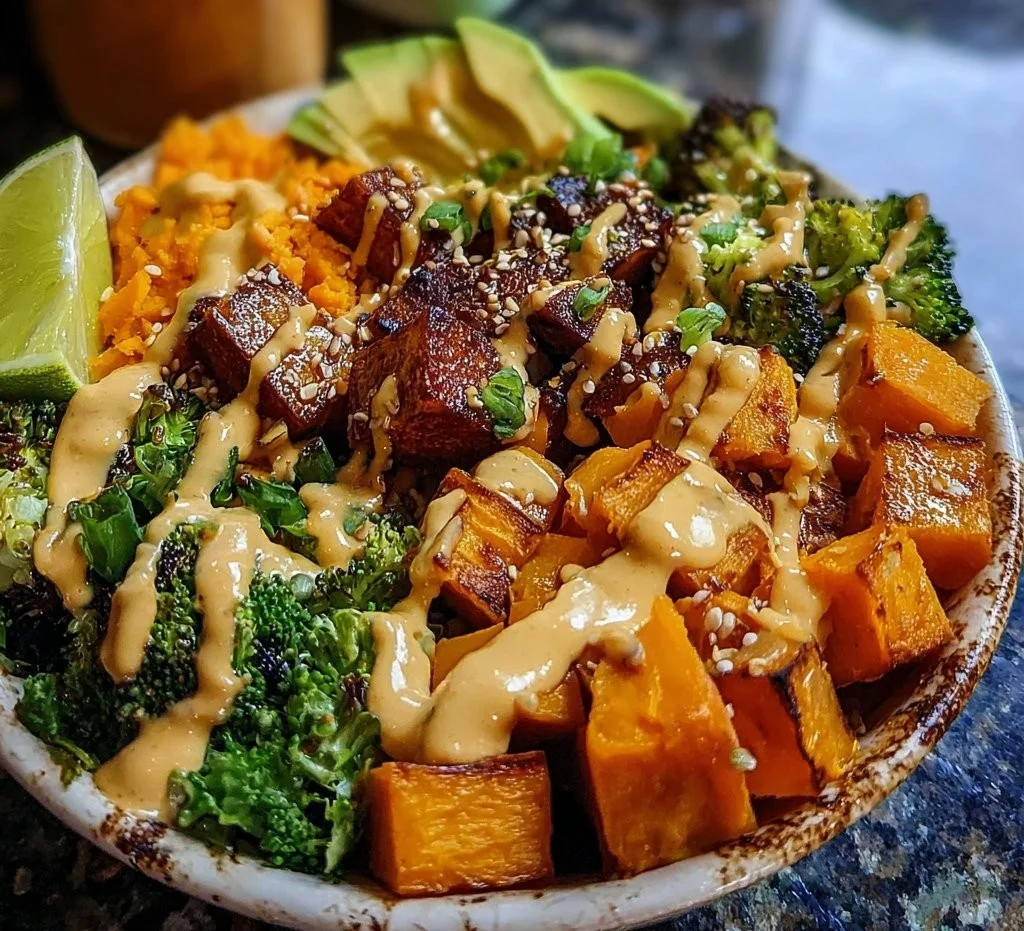
Thai Peanut Sweet Potato Buddha Bowl
Ingredients
Method
- Preheat the oven to 425°F (220°C). Wash and cube the sweet potatoes into 1-inch pieces, then toss with olive oil, salt, and pepper to coat evenly.
- Spread the cubes of sweet potatoes in a single layer on a baking sheet and roast for 20 to 25 minutes, flipping once, until edges are caramelized and interiors are tender.
- Meanwhile, steam or blanch the broccoli until bright green and just tender, about 3 to 4 minutes.
- In a bowl whisk together peanut butter, soy sauce, maple syrup, lime juice, sesame oil, and a splash of warm water to thin as needed.
- Divide shredded cabbage, grated carrots, roasted sweet potatoes, and broccoli among bowls.
- Slice or cube the avocado and place on top.
- Drizzle the peanut sauce generously over each bowl, sprinkle crushed peanuts and chopped cilantro, and add an extra squeeze of lime if desired.